
In Addis Ababa, a new generation of young storytellers are learning to report, verify and create from the device already in their hands.
Date: [10/12/2026]
ADDIS ABABA, Ethiopia: There is something almost deceptively ordinary about a smartphone.
It sits in a pocket. It travels through university corridors, cafés and crowded city streets. It takes photographs, records voices, captures video, carries messages and opens a window onto an extraordinary amount of information.
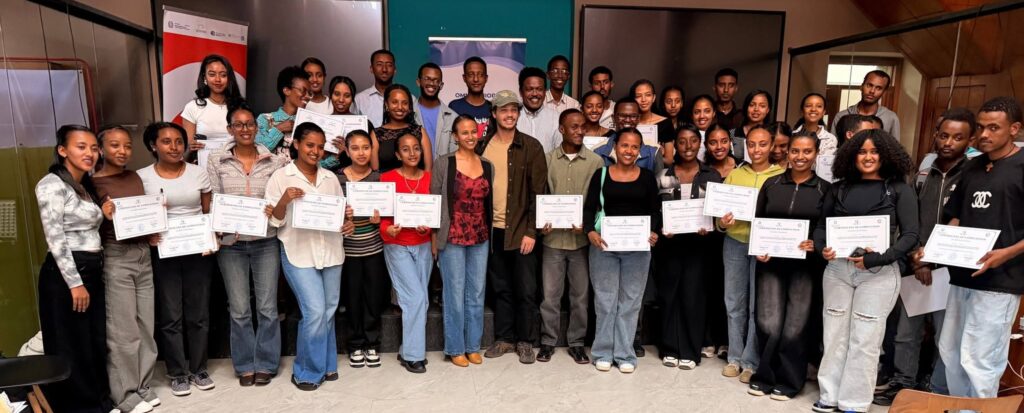
For a growing generation of young Ethiopians interested in journalism, however, the smartphone is becoming something more: a newsroom. That idea was at the centre of a training programme recently completed by 86 students from Addis Ababa University, who spent two weeks learning mobile journalism, digital content creation and information verification.
With support from the Italian Ministry of Foreign Affairs and International Cooperation (MAECI), the Italian creative non-profit IMAGINE Foundation, in partnership with the local media development civil society organization OMNI Ethiopia, conducted the training programme in four cohorts between September 28 and October 10. The programme was designed not simply to teach students how to make content, but to introduce them to some of the opportunities—and responsibilities—of working in a media environment where the distance between witnessing a story and publishing it can be measured in minutes.
The newsroom in your hand
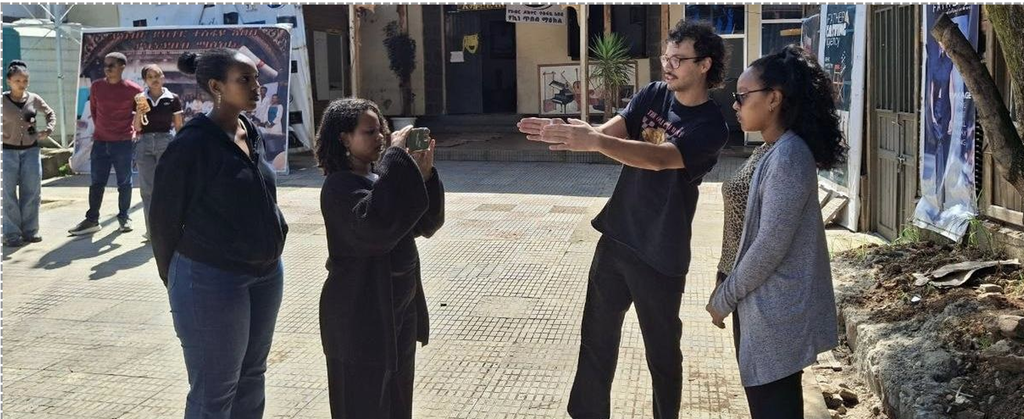
The old image of journalism is familiar: the reporter with a notebook, the photographer with a camera, the editor behind a desk. The new image can be much smaller. A phone can now record an interview, photograph an event, edit a video and publish a story. The technology has made production more accessible, but it has also made judgment more important.
A compelling image can travel quickly. So can an inaccurate one.
That is why information verification formed an important part of the training alongside mobile storytelling. For young journalists entering an increasingly digital media landscape, knowing how to tell a story is only half of the equation. Knowing whether the information behind the story can be trusted is equally important.
At the closing event, Begna Simesso, Director of OMNI Ethiopia, encouraged the students to think of journalism as something larger than a profession confined to a traditional newsroom.
“Journalism is increasingly moving beyond the traditional newsroom. Young journalists today have powerful tools in their hands to find, produce and share stories. But the ability to use these tools must go hand in hand with the responsibility to verify information and report accurately.” — Begna Simesso, Director, OMNI Ethiopia
From classroom to newsroom
Perhaps the most interesting part of the programme came after the training itself. At the closing event, the students met representatives from Tirta FM, Ethio FM and Harambe FM, alongside digital media organisations Tikvah and Birrmetrics.
They heard about the organisations behind some of the country’s media platforms. They listened to professionals talk about their experiences. And, importantly, they were introduced to possible pathways into the industry—including internship opportunities and the possibility of employment for outstanding participants.
For students preparing to enter journalism, such encounters can matter as much as a certificate. A certificate says that a course has been completed. A conversation with an editor, producer, broadcaster or digital publisher can suggest what might come next.
Iacopo Valori of IMAGINE Foundation highlighted the commitment of the students and the importance of creating opportunities for young people seeking careers in journalism.
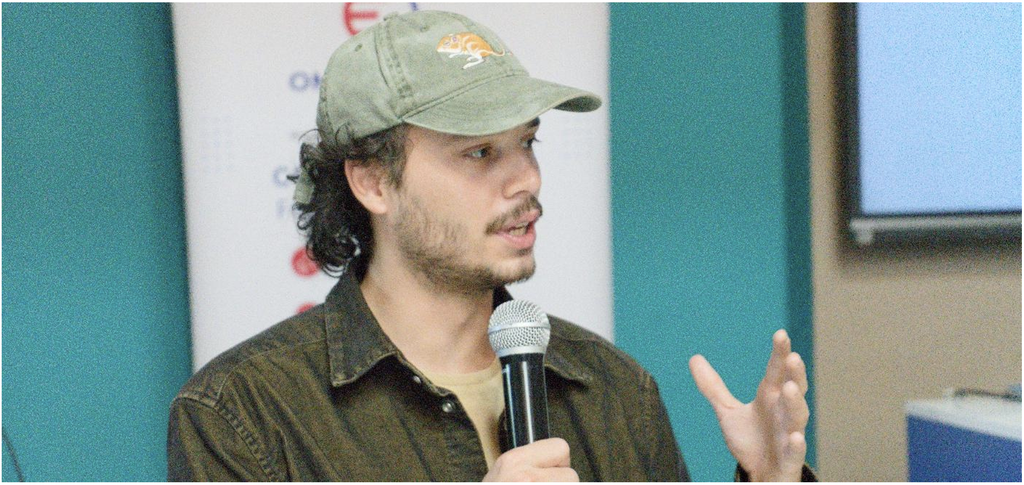
“It is encouraging to see young people investing in their future in journalism. Practical skills are important, but so are the professional connections and opportunities that can help young journalists take their first steps into the industry.” — Iacopo Valori, IMAGINE Foundation
A different generation of storytellers
There is also something symbolic about teaching mobile journalism to university students. They are already digital natives. They already communicate through images, short videos, messages and social platforms. The training asks them to take those familiar habits and turn them into something more disciplined: journalism. The distinction is crucial.
Being able to make a video is not necessarily journalism.
Being able to make a video that is accurate, relevant, ethical and meaningful is something else.
That difference sits at the heart of the challenge facing young storytellers everywhere—and perhaps particularly in an information environment where the speed of distribution often exceeds the speed of verification.
The human connection
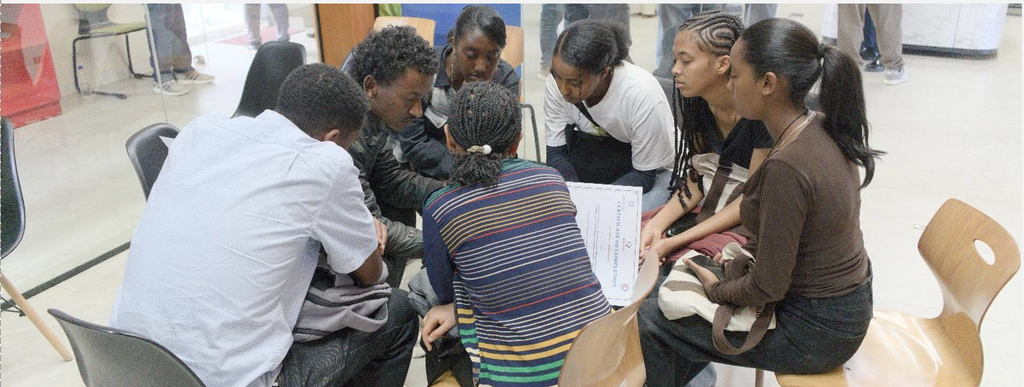
The final day of the programme was not only about certificates. Students and media professionals stayed together to exchange ideas and experiences. The formal networking session eventually gave way to something more familiar and distinctly Ethiopian: a traditional coffee ceremony.
Around coffee, professional titles become less important. Conversations become less formal. A student can speak to a media professional not as a prospective employee, but simply as another person interested in stories.
It is a fitting ending for a programme built around technology. Because however sophisticated the tools become, journalism remains fundamentally human. It depends on curiosity. On listening. On asking better questions. On meeting people. On understanding what matters to them. And, ultimately, on deciding which stories deserve to be told.
Beyond the newsroom
The Information and Active Citizenship for Peace and Security project, under which the training was conducted, is implemented by OMNI Ethiopia in partnership with IMAGINE Foundation, with support from the Italian Ministry of Foreign Affairs and International Cooperation (MAECI).
Its ambition extends beyond teaching technical skills. By strengthening digital media and information-verification capabilities among emerging journalists, the initiative seeks to contribute to more responsible journalism and more informed public engagement. The project now aspires to scale the exercise to 23 additional universities with schools of journalism in the country, if additional funding is available.
For the 86 students who completed the programme, the next chapter is now outside the training room. Some may enter radio. Others may find their way into digital media, television or entirely new forms of storytelling. Their tools are already in their hands.
The question is what stories they will choose to tell with them.